I’ve thought a lot about social class. Classism is a new one on me, but recent information suggests I might have been missing something.
My parents were very class conscious. Dad, a bus driver, was fiercely insistent that working class people should never forget where they came from. Mum, a teacher, was less strident (about everything!), but came from the “aristocracy of labour”, daughter and grandaughter of Thames Lightermen. They were both born in the East End of London and, probably more significantly, Communists. So, from an early age, class wasn’t just a cultural or identity question for me, but a theoretical one, informed by Marxism.
But things weren’t always so straight forward. We lived in a comfortable home, in a leafyish suburb and lots of our neighbours – and their children I went to school with – self-identified as middle class. It was sometimes awkward when I insisted I was not.
Fast forward half a century. Unearned income from winning the housing lottery probably makes me financially secure. I have a Ph.d, work as a university lecturer and am about to embark on my second Fullbright Scholarship. I don’t accept that these things make me middle class, but I can see why people do.
However, my path to these attributes hasn’t always been smooth. I failed the 11+ and didn’t do particularly well at school, so going to university was a non-starter. Instead, I became one of Thatcher’s many “unemployed school leavers”. I kept a list of the jobs I unsuccessfully applied for, but stopped when it hit three figures. Meanwhile, I signed-on while moonlighting as a builder’s labourer and listening to Billy Bragg. This pattern, more or less, continued for the next five years, until I was given an unconditional place at Sheffield City Polytechnic. Even with a degree, I struggled at first and ended up back on building sites. It was only when I got my first housing job that I began to feel I might at least have secure employment, which was far more important to me than any sense of having a career.
I attributed all this to the way of the world. I didn’t feel particularly unlucky or hard done by. In this sense, my working class origins probably helped. I hadn’t been brought up to expect much more. I was also comforted – and inhibited – by a Eugene Debbs quote: “I want to rise with my class, not from it”.
Recently though, it’s come to my attention that others felt differently. Two very good friends, who’ve known me for decades, but don’t know each other, suggested I may have been the victim of classism. One, who went to school with me (and has a similar background), said he thought I’d been written-off by teachers because “you sound common”! The second said he and his partner had been “so relieved” when I was awarded a Fulbright because for years they’d felt my class background was being held against me.
Both these revealations came as a surprise. Neither was intended to be condescending or insulting. On the contrary. I was touched they’d been thinking about me in that way.
I’m not sure they’re right though. I don’t think I have a particularly strong accent. It’s only “common” in the sense that it’s how most people who come from my neck of the woods sound. It’s true that Fulbright-like recognition has come late, but I’ve mostly assumed that was because I’ve not been very good at selling myself and/or been doing other things.
Having said all that, I must admit that my times in America have always made me feel much less conscious of my class. Maybe that’s why I go there? Of course, this is part of the nation’s mythology. Only yesterday, my former Congresswoman, Alexandria Ocasio-Cortez, was waxing lyrical about Kamala Harris’ middle classness. She was trying to blur the lines between the lives of the wealthy Presidential candidate and her potential voters by invoking the illusion of the US as a classless society. But opportunities have seemed to come my way more easily over there and perhaps that reflects a society less hidebound by class, or at least, its superficial signifiers.
What the suggestion of classism really makes me think is that, if I’ve been on the receiving end of it, what chance have others got? I don’t accept I’m “privilleged” in the way sometimes now used to obfuscate the true meaning of social class. But I have been fortunate in some ways many are not. To the extent that I’ve overcome class prejudice, it’s in the full knowledge that most working class people never do – and that’s what needs to change. My understanding of that dynamic isn’t classism, it’s capitalism.
I’m expecting these issues to be a significant part of my time at Rutgers-Newark. I’ll report back.
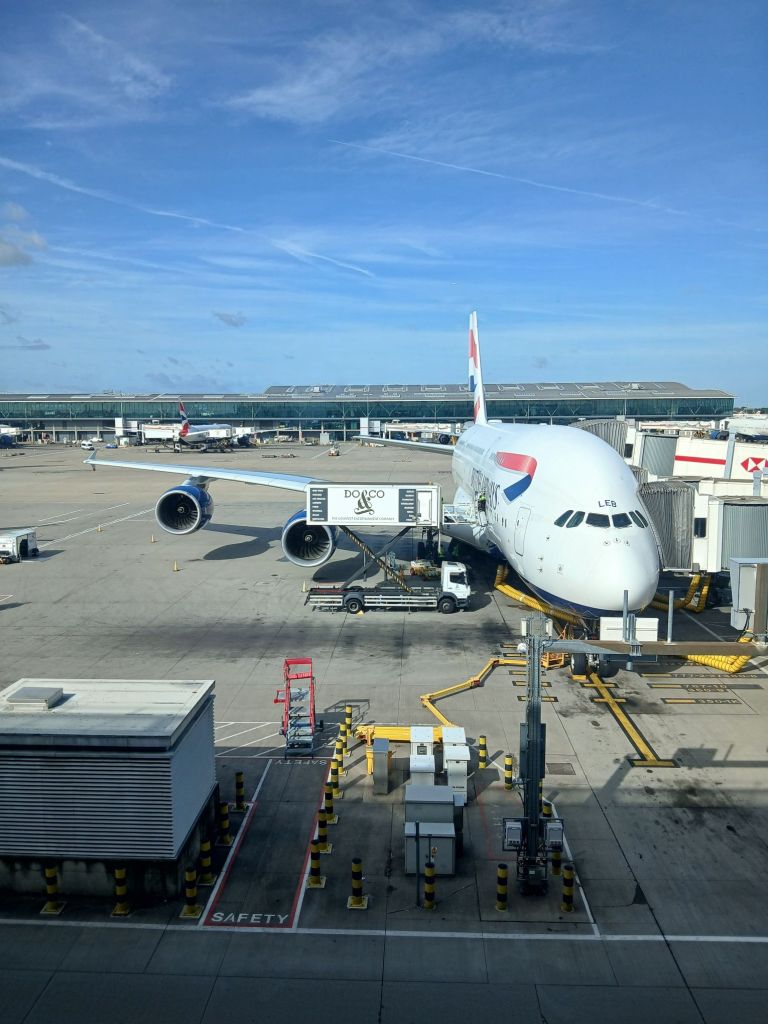
(Written from Heathrow. I’m now in Newark.)
 Letter from Newark, NJ
Leave a comment