I’m guessing most people who fly into Newark International Airport don’t stay in the city that bears its name, like most people don’t stay in Luton. There’s a connection between these two neglected places. Bedfordshire was noted for its brick making industry and Newark’s nickname is Brick City, for the same reason. I don’t really know Luton, but after 72 hours, I’m beginning to get a feel for Newark – and I like it.
It’s an old city, by US standards and had an important place in the settler-colonial project. Puritan invaders displaced the indigenous Lenni Lenape to build their “New Ark” in the late 17th century. The Revolutionary War raged in New Jersey. Just up the road is Military Park, once a common where Washington’s soldiers drilled. The city grew in that classic Euro-American way, with huge waves of immigration from Germany, Ireland, Italy and Eastern Europe, each group establishing its enclave.

Newark was a significant stop on the Underground Railway and there’s an excellent memorial to Hariet Tubman in the city centre. But New Jersey was the last state in the Union to abolish slavery. It didn’t do so until the end of the Civil War and there was clearly some resistance on the part of local slavers. A visit to the New Jersey Historical Society, where neither this, or the presence of African-Americans more generally, is mentioned, suggests this is still an uncomfortable aspect of Newark’s past.
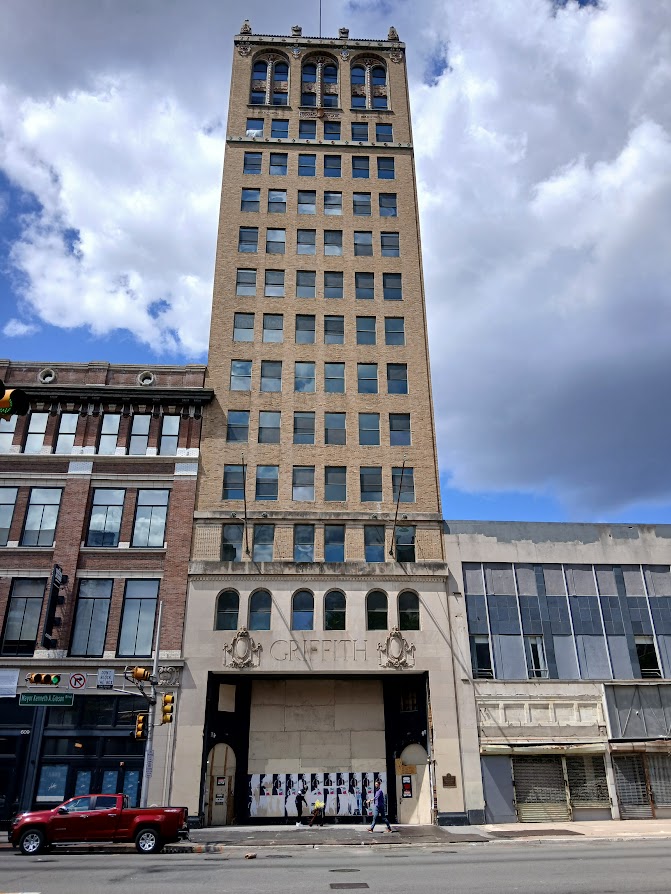
With its waterways (the city sits on the Passaic River) and proximity to New York City, Newark was an industrial boom town, becoming one of the largest in the US. with a population of 450,000 by 1930. Like so many of its type, the forces of deindustrialisation and suburbanisation have reduced and scattered the population and wealth ever since. The signs of this are fairly evident Downtown, with some magnificent early 20th century buildings now standing empty and forlorn.
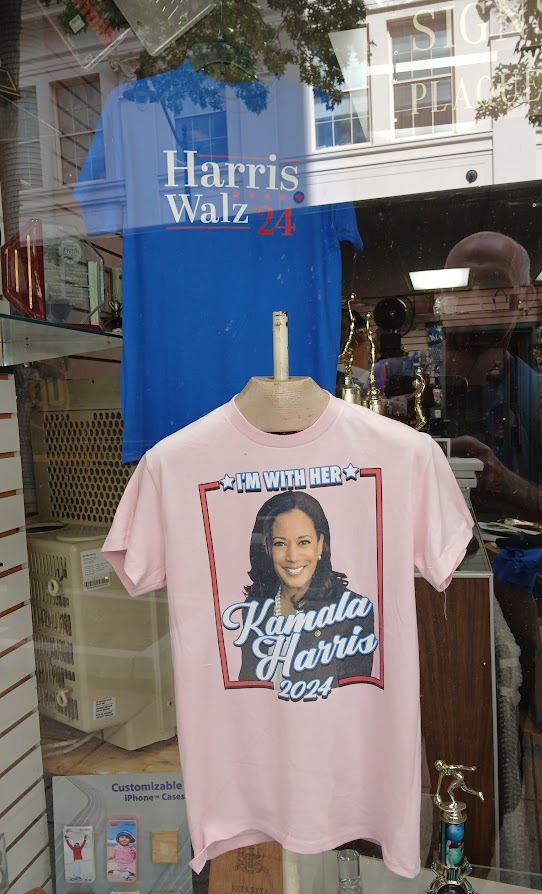
On Thursday night, we had the dubious pleasure of watching the Democratic Convention from Chicago. It was extraordinary: somewhere between a pageant and a pantomime. What it wasn’t, was political. A succession of emoting speakers performed for the cameras and whooping audience. But there was almost nothing substantive about the kind of policies that might improve people’s lives.
Kamala Harris, accepting the nomination for Presidential candidate, was slightly better, but her appeal was still largely based on presenting a likable personality. Given who she’s up against, this might take her some – possibly all – of the way. There is definitely a sense of movement momentum, underpinned by a genuine sense that Harris represents the future, Trump the past. As the New York Times put it the morning after, “Harris Wants America to See Itself in Her”, but its warning against being seen as purely “performative” is a definite risk. My sense is that, if the race remains as tight as it currently looks, reproductive rights will be the decisive factor.
The American experience is incomplete without a visit to Walmart. I’ve only been a couple of times and on each occasion, couldn’t get out quick enough. Because my apartment is rather spartan, I needed to spend a bit more time buying things yesterday, thus joining the self-destructive consumerism that is killing this nation. The store was of airline hangar proportions, typically, in a geographic wasteland between Newark and my old stamping ground, Jersey City. This required us to walk through Harrison, which was full of pleasant surprises.
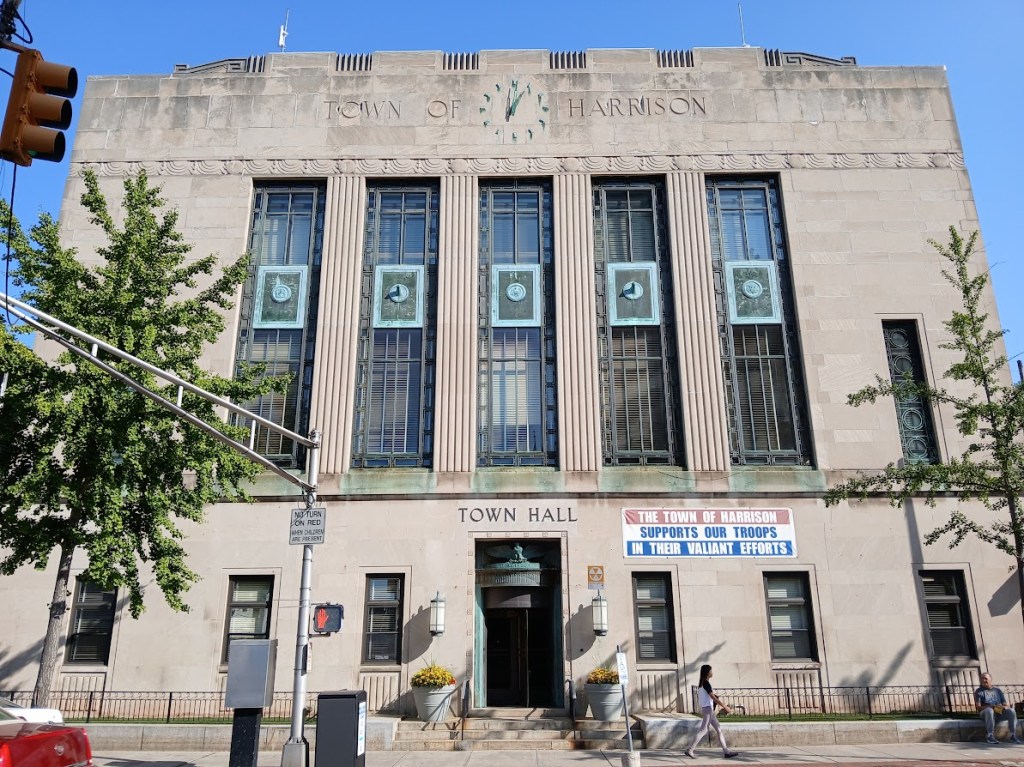
Newark is unusual for US cities because it has not been permitted to expand its boundaries by incorporating surrounding settlements. I presume this is a post-colonial land ownership legacy. So Harrison, which might otherwise be a Newark suburb, is independent, with its own New Deal-era town hall, in a now predominantly Hispanic community.
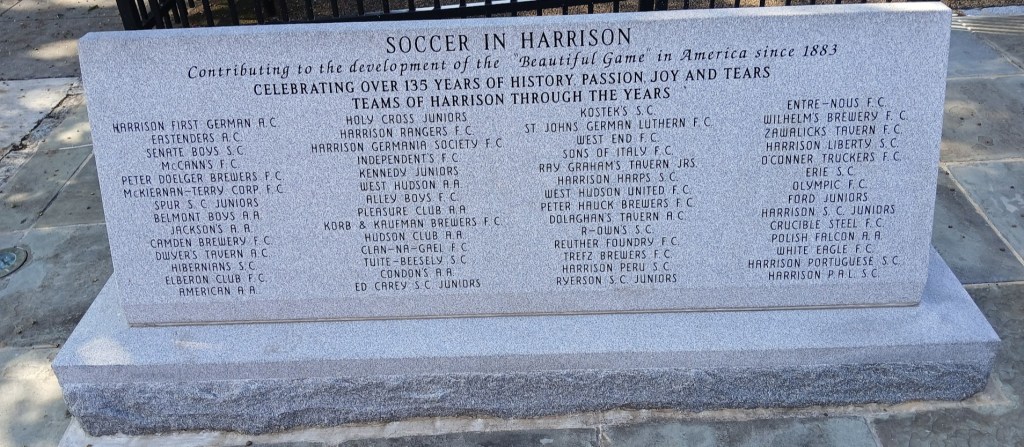
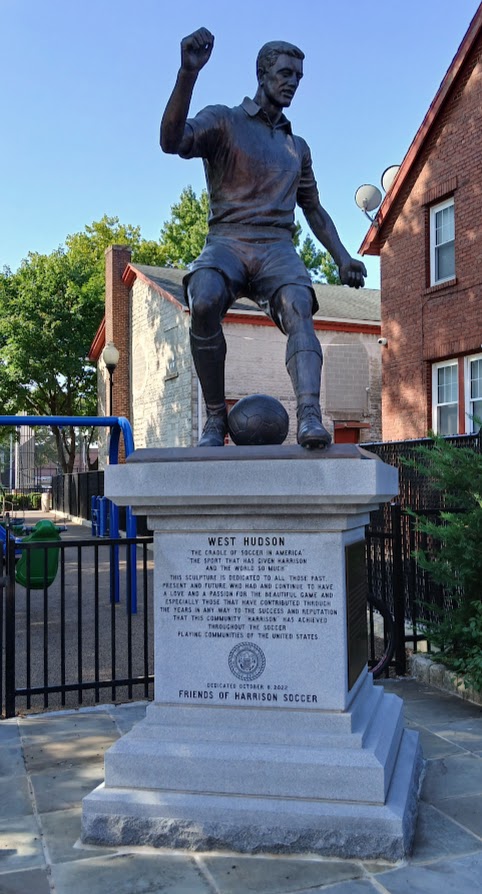
It is also the self-proclaimed “cradle of soccer (i.e. football) in America. There’s a very moving, to me at least, memorial to the game itself, rather than its star-players, in the high street. The list of teams almost reads like a social history of 20th and 21st century US history. Chiming with the spirit Kamala Harris is trying to invoke, an inscription reads “This connection, this diversity, has been and will continue to be our strength.”
 Letter from Newark, NJ
Leave a comment