One of many frustrations with discussion around housing is the perennial sense of hopelessness. We are constantly told by “experts”, lobbyists, journalists, academics and politicians that the problems are intractable. Of course, there are some valid reasons for thinking this. Successive generations of the aforementioned worthies have unleashed the behemoth of corporate property development. It is now very hard to get it under control – additionally so because of how the ideology of private property ownership has chained so many lives to the fate of the market. There is also the big issue of how we balance housing provision with avoiding environmental catastrophe, which is itself a key driver of increasing housing need. In the face of what are often presented as such immutable difficulties, policy continues to fail miserably. My fleeting optimism that a Labour government in the UK and a potential Democrat one in the US might change things hasn’t survived longer than the proverbial lettuce.
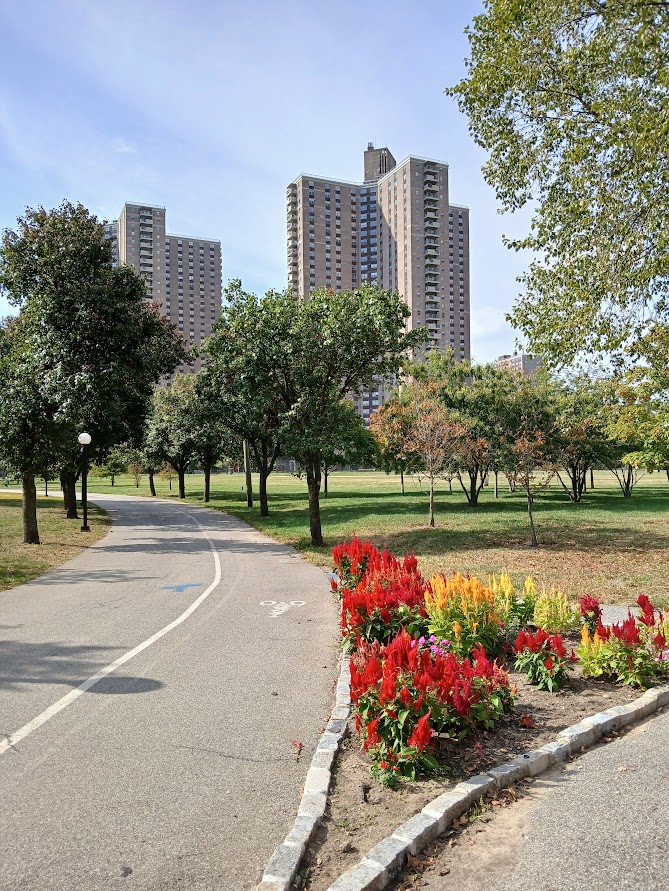
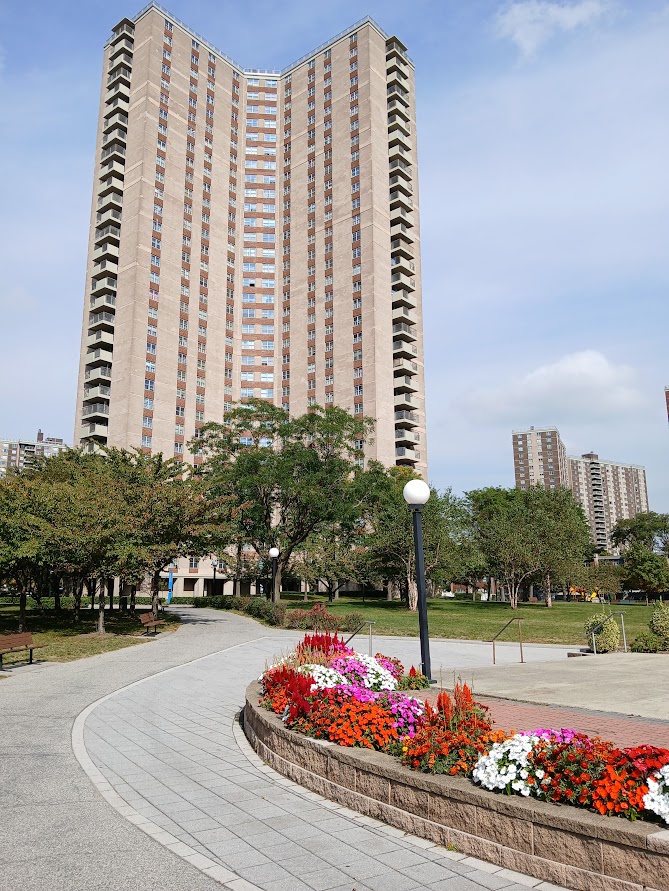
It ain’t necessarily so. Last week I revisited Co-Op City, the biggest housing co-operative in the world. It’s 15,372 homes, housing approximately 50,000 people on a one-square mile site in the north-east Bronx, built between 1966 and 1973. Eighty percent of the site is open space. I last went in 2021, since when I’ve learned a lot more about how this extraordinary place came to be. It’s a long and fascinating story, told in detail by a former resident, Annemarie Sammartino’s, in her excellent book “Freedomland”.
The title for Sammartino’s book comes from the eponymous, but short-lived, theme park that used to occupy the site. It’s a strange irony that the attempt to create a fun fair based on an idealised vision of America has been replaced by something much closer to truth – and much more useful and enduring.
Co-Op City arose when a distinctively New York constellation of stars came into alignment. The site became available after the theme park went bust and was bought, through a slightly murky land deal, by the Teamsters trade union. This created an opportunity for the United Housing Foundation (UHF), a non-profit, union-backed housing development agency founded in 1951 that had already successfully built and managed thousands of homes in the city. The UHF had become skilled at using a New York State funding mechanism (called Mitchell-Lama) and was able to borrow most of the $340.5 million development costs to build Co-Op City. The UHF had cultivated powerful political relationships, vital for ensuring public money was made available. Predictably, the construction ran into problems and significantly over-budget. This was partly because of the need to drain and reenforce the swampy land, but also the looming financial crisis that was to push NYC close to bankruptcy in the mid. 1970s. These forces led the UHF to significantly increase charges and culminated in the longest rent strike in the country’s history. However, Co-Op City weathered this and several other storms and has stood the test of time.
Outside the Dunkin Donuts, I chatted to Kazembe Balagun whose lived at Co-Op City for almost 30 years. He loves it. He inherited his 3-bedroom apartment in one of the tower blocks from his parents, who bought it with a downpayment of $15,000. Kazumbe now pays $1,800 per month in carrying charges i.e. rent, about 30% less than he would pay in the private market. But these are words (“bought” and “rent”) that have always been contentious at NYC’s union backed housing co-ops. From their inception, they were places imbued with an ideology founded on the cooperative principles of the 1844 Rochdale Pioneers. Among them was the belief that housing should not be a commodity from which individuals can derive personal profit. They are categorised as “limited dividend cooperatives”. The point is illustrated by Kazumbe: “My parents bought our apartment for $15,000. If I choose to move, I’ll get that $15,000 back, but nothing more.” In other words, the capricious writ of the market, which might value Kazumbe’s home at $250,000+ and enable him to cash-in, does not run here.
Co-Op City and several other places like it in NYC, are under constant pressure to privatise and enable their residents to join the housing market. It’s a rearguard action, but one that Jay and Ronda Hauben are determined to win. They live in a Mitchell-Lama building in the Upper West Side of Manhattan, two blocks from Central Park. Jay has a vivid example of the false economies that lie behind the market impulse. He knows someone who has lived in his block for over 50 years. She calculates that she has saved $3 million by not having to pay a private landlord’s rent for half a century. That’s not a bad nest-egg to pass on, often cited as one of the motivations for tying our fortunes to the housing market.
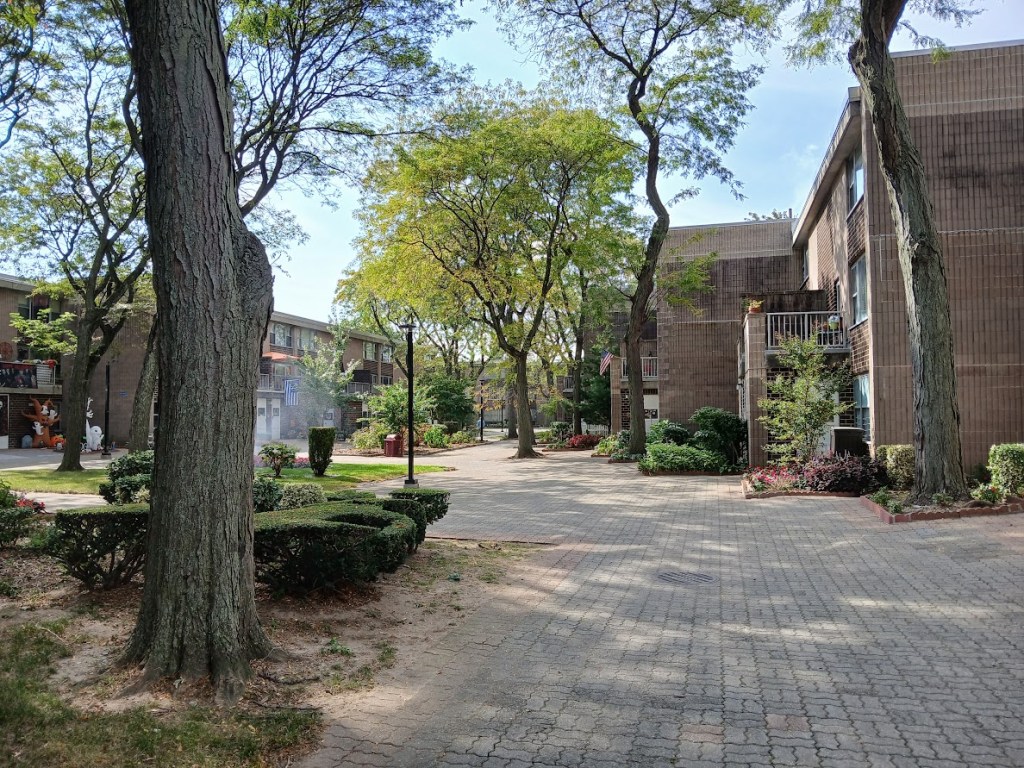
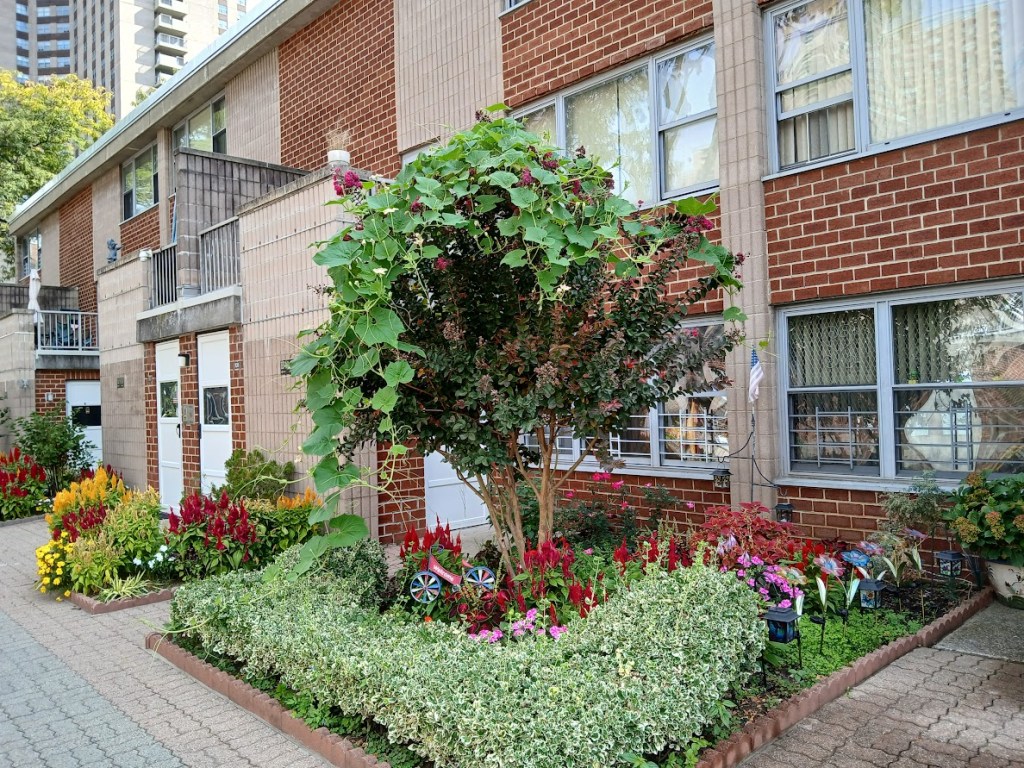
Of course, Co-Op City isn’t utopia. But walking around it brings a sense of a place that works. There’s an air of calm, greatly helped by cars not dominating the environment. The grounds and gardens are cared for and litter almost non-existent. Notice boards advertise numerous, varied community activities. Neighbours sit on benches and chat. It’s ethnically mixed, although most of the Jewish residents who were the majority in the early days, have moved on. As Kazembe rightly says, Co-Op City busts several myths, particularly the one about tower blocks inevitably becoming crime-ridden slums in the sky, especially when lived in by poor people of colour. He describes Co-Op City as “inadvertently anti-racist” because of how it has successfully integrated people from different background, without necessarily meaning to do so.
Kazembe still values the cooperative ethos. When he’s presented with an official form that refers to him as an “owner” or “tenant”, he crosses it out and writes “cooperator”. This identity question has been a vexed issue since the earliest days of NYC’s workers’ cooperatives. But then, as now, for many people the most important thing about places like Co-Op City is having a home that’s secure, well maintained and doesn’t drain their financial and mental strength. Whether they celebrate the values of cooperativism, or not, most of them know these things can never be guaranteed by the rapacious market.
Co-Op City was recently used to illustrate a New York Times article co-authored by Alexandria Ocasio-Cortez. In it, AOC rightly praises the true value of places like Co-Op City. However, what she understates – and this has been a feature of her position on this issue – is that building and maintaining housing that relieves working class people form the brutality of the market isn’t the product of government largesse. In every instance, it’s the result of struggle and campaigning from below. The roots of Co-Op City can be traced directly to New York City’s, socialist-inspired mass movements of the early 20th century and the post-war creation of a city-level welfare state, driven by strong trade unions. Until or unless we can rebuild that kind of working class power, we will never see the likes of Co-Op City again.
 Letter from Newark, NJ
Leave a comment