Quoting Freud’s definition of insanity has become a bit hackneyed. But listening to some of the pre-election discussion on housing here is a definite case of doing the same thing and expecting a different result. In one sense, it’s encouraging that the issue is penetrating mainstream political discourse at such a critical moment. I think there’s more attention on housing than there was in July’s UK election. But although there are significant differences between what Harris and Trump say they would do about it, both are locked into the same policy mindset that has failed repeatedly in the past.
Trump’s housing rhetoric is entirely predictable. He’s an uber-YIMBY (something people who align themselves with that false narrative should maybe reflect on). He argues that any regulation of well-meaning property developers, like him, inhibits the mystical ability of the market to meet housing need. His pet-hate is “zoning”, the US equivalent of land use planning. He thinks profit-seeking developers should decide what gets built where, not elected local politicians. In a typical stream of unconsciousness, he said in a July interview: “Fifty percent of the housing costs today and in certain areas — like, you know, a lot of these crazy places — is environmental, is bookkeeping, is all of those restrictions. Building permits. Tremendous [restriction].”
Stripped of the verbiage, this bears some uncomfortable comparisons with the kind of things new New Labour has been saying lately about housing. But to my knowledge, there is no evidence that an unfettered housing market improves housing provision and conditions. On the contrary. If Trump’s claims were valid, the slums of Victorian England, when there were hardly any constraints on builders, would never have developed. Houston, Texas, which famously has very light touch zoning, would be a housing Nirvana. So would the so-called Docklands of east London where, for almost two decades from 1981, planning rules were substantially relaxed to allow a developers’ jamboree.
The fantasies of Trump and the YIMBYs (there’s a name for a band!) are self-serving bullshit. Sadly, the ability of Harris – like Starmer, Rayner et al – to challenge it are hamstrung by their own narrow housing perspective. Like many before them, they are obsessed with the holy cow of home ownership. All of their technocratic policy solutions flow from this flawed starting point. Harris is repeating the “we need to build more homes” mantra, but with little analysis of the systemic inequalities in the housing market (or the environmental implications of heedless development). She has said she’d clip the wings of corporate property investors by capping some rents for private tenants. But she’s also pledging to renew the byzantine system of tax breaks that private developers feed on, while they simultaneously exploit discredited definitions of “affordable” housing. In the lesser of evils choice facing Americans on November 5th, Harris would probably be better on housing, but basically, it’s more of the same.
The Democrats’ timidity on housing reflects their general reluctance to confront Trump’s racist rhetoric, which is directly linked to housing. He has repeatedly invoked the fabled suburbs as the signifier of US values and proclaimed himself their defender. He has explicitly said he would block housing for people with low income in suburban areas – a practice with a long and disgraceful practice in this country. When Trump talks about saving suburbia, it is unsubtle code for “keep the suburbs white”. But Harris largely ignores this crude racism, while advocating the same type of public subsidies to the private market that have been the historic accelerant of segregation.
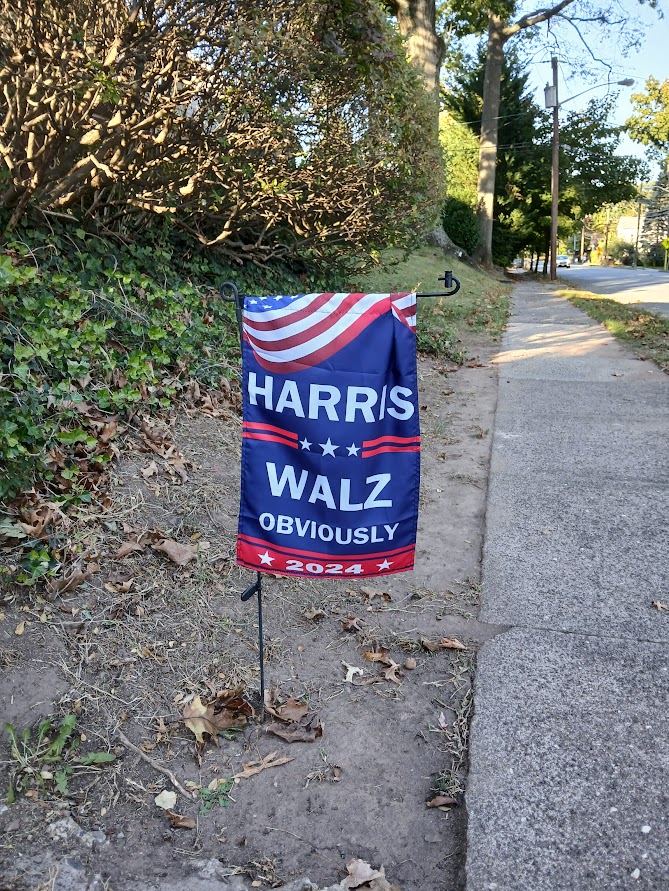
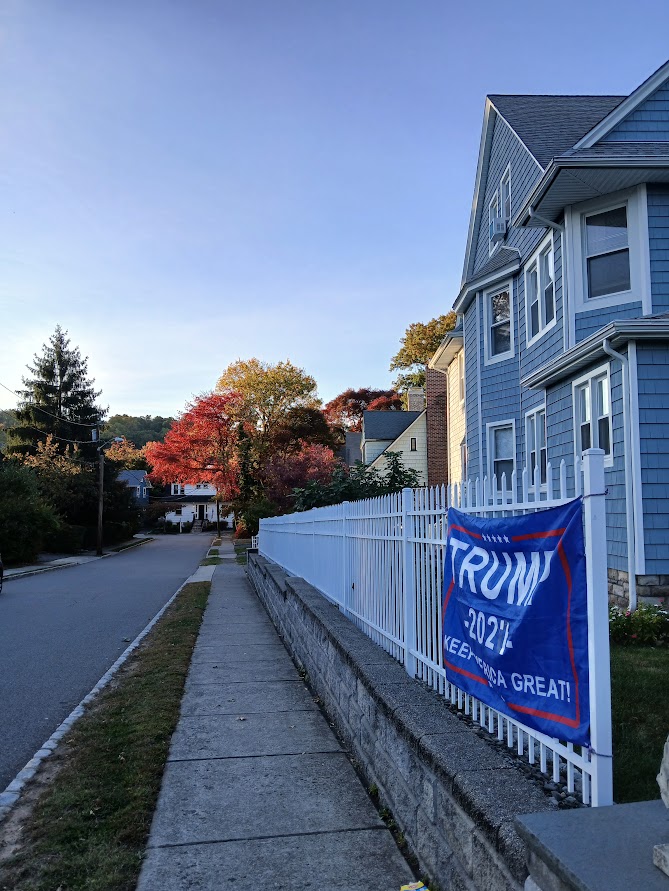
I went for a long walk in a New Jersey suburb last week. It’s a state where some of these issues have been particularly vivid. It was heavily featured in Kenneth Jackson’s seminal work, “Crabgrass Frontier”, and some of the most important campaigns to oppose racist housing practices happened here. But I wonder if Trump (who also has one of his golf courses in deepest New Jersey suburbia) is miscalculating. In a completely unscientific survey, I reckon Harris lawn-signs outnumbered Trump’s 100 to 1 along my walk. Admittedly, the area (Montclair) is known for its liberalism. But more reliable data suggests Trump’s appeal to a reactionary suburban mentality ignores the social changes in these places, partly fueled by the centrifugal migration from over-priced urban housing. It would be a poetic irony if Trump is defeated by reluctant suburbanites who don’t share his 1950’s vision of their communities.
However, that’s by no means certain. If Harris loses, it will be because she has failed to convince enough people that she is offering a more secure economic future, particularly around housing costs. Putting her faith in the private sector to solve a problem it created is equivalent to relying on Dracula to run the blood bank.
 Letter from Newark, NJ
Leave a comment